Wednesday, 29 June 2016

SHE’S THINKING ABOUT IT
Sandra Gal has seemed to find her form in her ninth appearance at the Walmart NW Arkansas Championship. She posted her two lowest rounds of the year the past two days (65-66) in Arkansas. Her best finish this year was T13 at the HSBC Women’s Champions. The German said it’s been a tough season for her so far and has been working on every aspect of her game. She also started using a Focus Band, a device that studies brain activity.
“It just kind of tells you whether you are left brain or right brain,” said Gal. “So you want to be in your right brain when you are executing shots, and that’s basically a quiet mind. So you’re just working on, you know, being as athletic as you can during your routine.”
Gal, whose only LPGA Tour win came back in 2011 at the Kia Classic, has now made 136 starts since her lone victory. She said she won’t start the day on Sunday with a number in mind but know she’ll have to go low.
“I just want to enjoy it, which that’s a cliche, but it’s true. I want to enjoy it and play well, and I don’t want to put a score out there,” said Gal. “I haven’t the last two days. So if I just kind of go play and hit one shot at a time, I think whatever happens, happens. You know, if you put too much pressure on yourself to score, I think some people do that and they play well. I’m not going to do that.”

Thursday, 28 April 2016

Measuring Mental Toughness

Henry Boulton
Ask a PGA Tour player how much he can bench-press, and you'll likely get a fast, specific answer. But how do you quantify "soft" skills like mental performance and emotional resilience—which are arguably more important to winning? A handful of players are doing this with the technology in the FocusBand—a wearable device that tracks emotional state and stress response through electroencephalography readings. It might sound like science fiction, but Jason Day used one of the devices to build his distinctive eye-fluttering pre-shot routine—which he credits for moving him into a calm, hyper-focused state.
Australian electronics engineer Henry Boulton developed the FocusBand with his father, Graham, in 2009. "We were coaching some guys on the Australian and Japanese tours, and they had all the technique, fitness and diet, but they'd get to a tournament and fall apart. We started looking for products that would address the mental side, and we couldn't find one. So we built our own."
Three sensors inside a bioprene headband measure brain activity and link the data to a smartphone app. By following the app's exercises and responding to visual cues and sounds, the user can learn to change the reading on the app's brain avatar from red (thinking) to green (creative). Boulton calls this green state mushin, Japanese for the "zone" or "no-mindedness."
The ability to measure brainwaves has been around since the 1920s, but interpreting these waves for the average consumer is a new frontier in performance training. The system a user gets with the FocusBand, while basic, offers analysis at the level you'd get with a body-tracking device like Fitbit.
"Once we defined the process, we were able to score the process," says Boulton, who splits his time between Brisbane, Australia, and Aliso Viejo, Calif. "If you can change your scores you can change your results. Once you get those results, you get belief. That's the edge the top players are looking for."
The device costs $600. Users can download apps specific to golf, yoga, baseball or general mental performance. Boulton is testing the newest FocusBand element, GPS Brain Tracka, which will allow users to review their brain state with each shot—showing the lift or hangover that comes with each outcome. Call it a real-time mental scorecard. "Usually, the starting point for training has been technique," Boulton says. "You start with technique, work on fitness and then finish with mind training. We're showing that you should be training the mind first. Get your mind right, and everything will get better together." —Matthew Rudy

Monday, 4 April 2016

FocusBand Used In A Tournament


Well, I ran out of gas at the end of this week, but it is still my favorite trophy wink emoticon It was still a special week as I wore the FocusBand for the first time in competition (wearing it in the picture) and we got some good data. It's an exciting learning process - just need to be patient with the changes I'm making. On our level it is 95% mental, so I'm looking forward to the progress and insights! Thank you @kiamotorsusa, Aviara Golf Club and all the lovely fans and volunteers for cheering for us! Congratulations @lydsko ðŸŽ‰

Saturday, 12 December 2015

FlightScope Signs Exclusive Partnership Deal With FocusBand

FocusBand Press Release
11 December 2015

Leader in ball tracking technology partners with wearable, mind-sensing headset developer to bring new level tech to sports
ORLANDO, Fla. - December 11, 2015 - FlightScope, a world leader in the development and manufacturing of 3D Doppler club and ball tracking monitors, golf radars and launch monitors for sports, today announces its exclusive partnership with FocusBand, a wearable, motion based mind-sensing headset that measures and trains your shot routine using real time audio-visual neuro-feedback. FocusBand is the #1 motion based brain training system on the PGA Tour. Through this partnership, FocusBand technology will be integrated into all FlightScope products.
"As I see it, FocusBand is essentially the FlightScope for the brain, which is what makes this partnership such a natural fit for us," said Graham Boulton, CEO of FocusBand. "The partnership will further strengthen our already successful Mental Process, Results, & Belief system by integrating the FocusBand and FlightScope technologies into a unified system, providing analysis and feedback on several different aspects of your game."
FocusBand analysis will be integrated into FlightScope's all in one tool for its mobile and PC platforms. FocusBand will measure the mental process for shot routines, from the time before the swing through impact, and FlightScope will track the results with 27 different swing and ball flight parameters. Also, using FlightScope's apps, players can instantly view neuro-feedback side-by-side with the radar data, and compare their state of mind with real-time results for enhanced training.
"We've spent a lot of time mastering FlightScope technology to accurately measure a player's physical skills, but we were interested to explore how someone's mental state ties in to their overall game play as well," said Henri Johnson, CEO of FlightScope. "This partnership with FocusBand is the perfect way to help us take FlightScope's technology to the next level and give our players an effective way to explore all facets of their game."
FlightScope will debut its FocusBand integration at the PGA Merchandise Show in January 2016. To pre-order a FocusBand with FlightScope integration visit: flightscope.com/en/product/focusband.

Tuesday, 24 November 2015

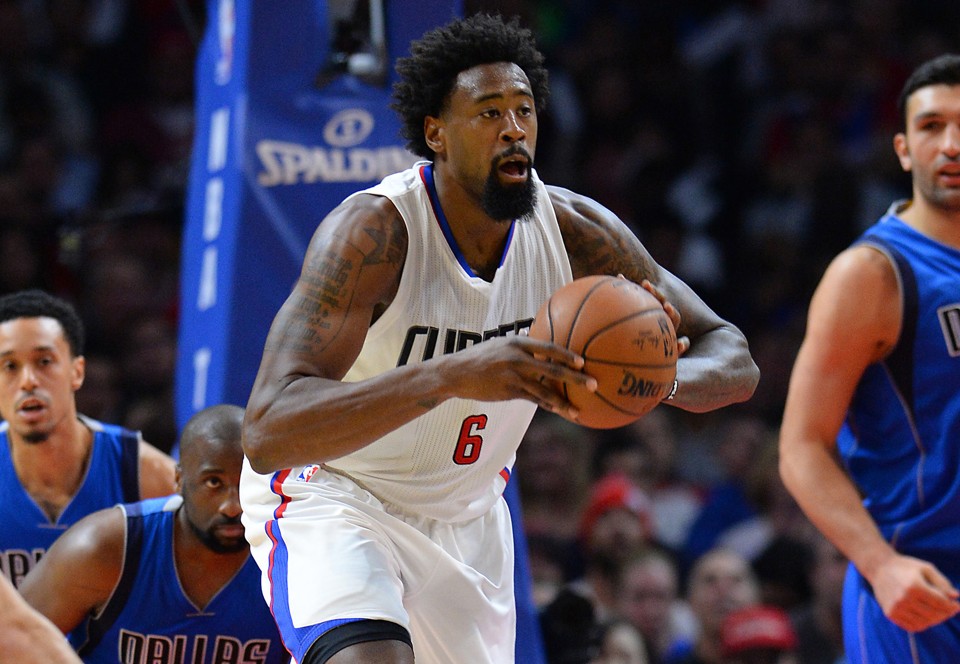
Quiet Eye with DeAndre Jordan

Quiet Eye with DeAndre Jordan
The Los Angeles Clippers's DeAndre Jordan

Consider two very different basketball players. The Los Angeles Clippers star DeAndre Jordan, one of the strongest, quickest players in the NBA,  nevertheless made only 39 percent of his free throws last year. Then there’s his teammate, Jamal Crawford—not as fast or as strong as Jordan, but he makes 90 percent of the shots he takes from the foul line, a rate that’s among the best in the league.
What makes one player a stellar shooter, while another has more trouble making a basket? As Jordan demonstrates, it’s not just a question of sheer athleticism. The difference between athletes like him and athletes like Crawford may well come down to a concept known as “quiet eye”: a new way of understanding how people perform precise motor-skill tasks like shooting a basketball, flying a jet, or removing a brain tumor.
Until recently, most researchers viewed these skills in terms of coordination and reflex, believing that those who were better at making a free-throw or suturing a wound simply had had superior physical dexterity. But in the past few years, a small group of neuroscientists have identified a new way of understanding coordination, one that focuses on visual and cognitive skills over physical prowess.
The concept, known as the quiet-eye theory, is deceptively simple: Before you perform an action, you focus your gaze on the salient aspects of your goal—the rim, the catcher’s mitt, the malignant tissue, and so on. In recent years, using eye-tracking technology, researchers have found that locking onto the relevant stimulus during the right time frame—typically the few hundred milliseconds before, during and after the movement—greatly improves your chances of success.
“When your eyes provide the data, your motor system just knows what to do,” says Joan Vickers, a cognitive psychologist at the University of Calgary and one of the originators of the quiet-eye theory. “Your brain is like a GPS system. It detects target, speed, intensity, and distance.”
But quiet eye encompasses more than vision; it’s about attention, too. The gaze is a key factor in the brain’s ability to concentrate on the essential details rather than ancillary noise. In a study published this spring by researchers at the University of Exeter in the U.K., the scientists found a clear link between a person’s ability to store information in short-term memory—a good measure of the ability to focus—and their ability to use the quiet eye approach.
Some evidence indicates that the quiet-eye technique stimulates the dorsal area of the brain, which regulates focused, goal-directed attention. It may also suppress activity the ventral region, which oversees stimulus-driven attention—the kind that keeps track of a scattered, fluid set of variables. There’s probably more to it, though: Mark Wilson, a psychology professor at Exeter who studies quiet eye, points out that training in the technique tends to change a range of physiological measures, including heart rate and patterns of muscle movement.  

Thursday, 19 November 2015

Neuro Training at Cairns Sports Performance Clinic


FaceBook by Rob Gronbeck
www.cairnssportsperformanceclinic.com.au

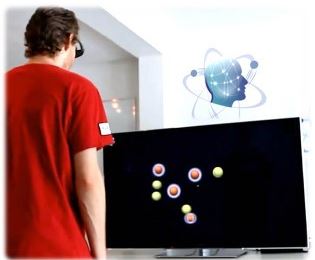
"I train athletes using a 3D multiple  object tracking system called NeuroTracker (this is not an ad I assure you). The program tests & trains 4 different types of attention & visual processing speed. The best team-sports athletes are the best at this task and my clients and I have greatly improved our sports performances as a result of the NT. So... :)


My FocusBand + Neurotracker experiment:


Step 1) My clients and I performed our regular NT training session (5 - 6 mins) scoring near our own current plateau/ceiling scores.
Step 2) My clients and I did 5 - 8 minutes of FocusBand Mental Energy Tank (up to 300 - 800 MET).
Step 3) My clients and I all immediately began another NT training session (lasting 5 - 6 minutes).


Result: In 4/5 times I have conducted this process my clients and I have all resulted in significantly improved scores... bonafide PBs.


Discussion: While a small sample size, it appears getting into a 'high Mushin state' (80) for a short period of time (5-8 mins) prior to perceptual-cognitive tasks such as NT may lead to greater positive performances and enhanced attentional & visual tracking abilities in athletes (and likely non-athletes as well).

VERY NICE WORK GRAHAM & HENRY & THE TEAM at FOCUSBAND on such an elegant design and piece of equipment!!"