Sunday, 28 October 2018

Releasing Trauma with NeuroScience


NeuroSelf Care App Screens

Most of us will experience at least one traumatic event in our lifetime.


A traumatic event is an incident that causes physical, emotional, spiritual, or psychological harm. The person experiencing the distressing event may feel threatened, anxious, or frightened as a result. The person will usually need support and time to recover from the traumatic event and regain emotional and mental stability.


This happens as in many cases the real cause of the trauma has not been found and the emotion has not been detached from the event or the memory.


Trauma can be caused by an overwhelmingly negative event that causes a lasting impact on the victim's mental and emotional stability. While many sources of trauma are physically violent in nature, others are psychological. Some common sources of trauma include: Rape.


Nowadays with Interventions like NeuroSelf Care & Havening, trauma can be isolated and released  in as little as 1-2 sessions with a Practitioner


Delayed responses to trauma can include persistent fatigue, sleep disorders, nightmares, fear of recurrence, anxiety focused on flashbacks, depression, and avoidance of emotions, sensations, or activities that are associated with the trauma, even remotely.


With guidance from a certified NeuroSelf Care Practitioner, Trauma can be just a distant memory to let you get on with your life


The NeuroSelf Care app addresses History taking, LifeStyle Pillars, Breathing, and Brain Training. It also displays back to the client what their brain activity is while performing the various 8 stages of enlightenment.This enables the client to involuntary realign their mental state with their adjusted intended state. Eg calm & happy.

Trauma is released by first arousing the traumatic event so the relevant circuits in the brain are engaged, then rewiring that section of the brain where the trauma is being stored.

Monday, 17 April 2017

“Try Out” the FocusBand for FREE

Most of us like to try out an App to see if we can use it.

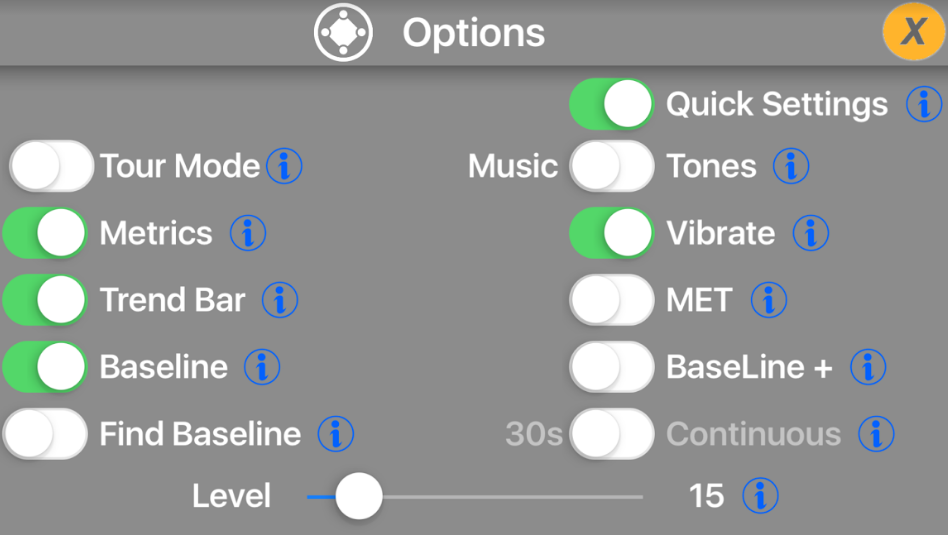
Options Pag 1.PNG
The FREE FocusBand App has a Simulator which can be used for training and evaluating initially without the FocusBand Headband. Brain signals are simulated internally which covers the majority of the Apps functionality

Ironically using the Simulator along with the Getting Started instructions is the quickest way to get to know what the  the FocusBand is all about.!


With the included “Simulator” you can work your way through the Options page


Quick menu 1.PNG
What you can “Try out”
  1. Breathing - set your inhale/exhale rhythm
  2. Learn how to set the BaseLine
  3. Learn about Mushin & Quiet Eye and how they are used in the preshot routine
  4. Learn how to use the NeuroCombine
  5. Learn about the Stats & reporting
  6. Learn about the options and when to use them
  7. Learn how to configure your personalised music and avatar
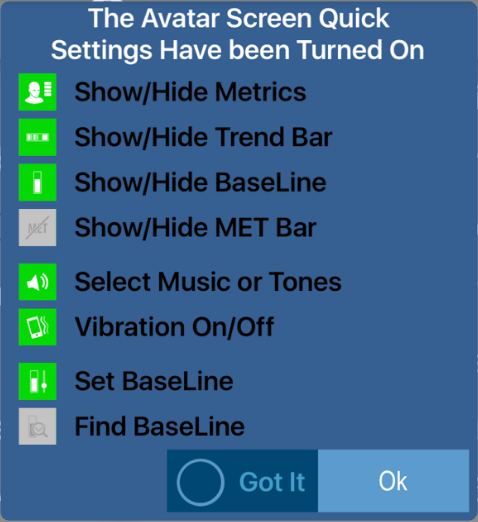
  8. Learn what the Quick Settings


The FocusBand App is available for FREE from the App stores. Search for “focusband” all one word  

Tuesday, 11 April 2017

ENTER OUR NEUROVISION CONTEST for a chance to win a....

ENTER OUR NEUROVISION CONTEST! - For a chance to win

   A FREE FOCUSBAND 


    PLUS other minor prizes

    
     Entries closing 30th May 2017


The NeuroVision app lets you “see” and “feel” what’s happening
This  scenario is what every athlete dreams of ….
How to  improve  their skill  “involuntarily”
Notice how infants  involuntarily put their hands in place to brace their fall?

Video examples:

Golf:

Air Flight Simulation:


Race Car Simulation: 


Ten Pin Bowling:


Prizes

1st = FocusBand (Value $500.00 )
2nd = FocusBand Advanced Online Training (Value $500.00)
3rd = 12 months subscription to our Cloud (Value $240.00)
4th = FocusBand Intermediate Online Training (Value $200.00)

It’s easy! ..... Here’s how to enter:


1. Take a video with our NeuroVision App and use the hashtag #Focusbandcontest2. Send your Name, Email & video URL to Elaine@focusband.com so your entry is valid & official before 30th of May.
3. Share the video with your friends so you can start obtaining "likes"
4. Winners will be based on "likes"
5.We’re giving away NeuroVision App for FREE. For more info & to claim your promo code elaine@focusband.com

Official Rules: 

1. FocusBand retain the rights to use the video for their promotion work.
2. Entries for the first stage close on the 30th May 2017
3. Videos must be authentic & you have permissions to upload the video
4. The video must show the FocusBand Logo while the headset is on the player
5. Maximum length 60 seconds
6. FocusBand’s decision will be final and no correspondence will be entered into.
7. There is no Entry Fee
8. Content must comply with all local and national laws of the country of origin and the United States. Content must not 1) promote illegal behavior; 2) support racial, religious, sexual or other invidious prejudice; 3) advocate sexual or violent exploitation; 4) violate rights established by law or agreement; 5) invade the privacy of any person; or 6) be otherwise inappropriate as determined by Population Connection in its sole and conclusive determination.
9. Winners will be announced by email
10. If you would like to Enter the contest but don't have the NeuroVision App, we are going to give away Promo Apps so you can try the NeuroVision App for FREE. 


Monday, 10 April 2017

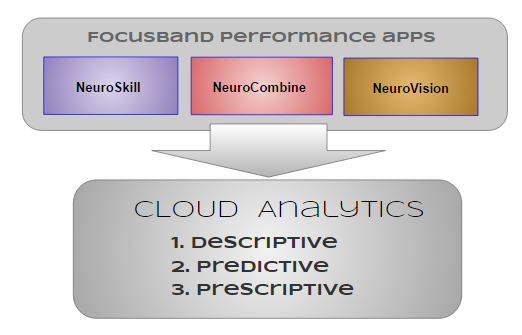
Cloud Analytics - What's It All About

Cloud 1.PNGThere’s a lot of buzz about Cloud analytics in golf coaching organizations.
How can you apply Cloud analytics to improve athlete’s results and performances?

To do so means measuring & leveraging the digital data available to you – both structured and unstructured.

Unstructured data is often text data, such as reports and scorecards.

Cloud analytics is the process and technology used to make better sense of large amounts of digital data.
Cloud analytics enables you to engage with the Cloud to answer your questions, solve inconsistency, and uncover trends and insights.

You can also use Cloud analytics to drive innovation and pursue breakthrough coaching ideas.

Let’s look at the different types of Cloud analytics available to you:

1. Descriptive analytics

Answer the question: What happened?
Descriptive analytics helps you get in touch with reality, providing visibility and a single source of the truth. Apply descriptive analytics eg Cloud Team Summary Report to provide greater levels of visibility across your athletes.

2. Predictive analytics

Answer the question: What might or will happen?
Predictive analytics helps you pinpoint the most likely outcome – and its process implications. For example, using predictive analytics, you can project where a process may breakdown under pressure. .

3. Prescriptive analytics

Answer the question: What should we do about it?

Prescriptive analytics helps you solve problems. Harness prescriptive analytics to incorporate drills to reduce time and effort in resolving the process issue.

Sunday, 9 April 2017

Grounding, a Brain Booster

Grounding may also boost your mood. In a first-of-its-kind study, researchers at the University of California - Irvine tested 40 adults to see if grounding could improve mood. Part of the group grounded for one hour; the others did not ground. The participants' moods were assessed on a special scale before and after the experiment. Those who grounded reported pleasant and positive moods, while the others had no improvement. The researchers reported their findings in the April 2015 issue of Psychological Reports.

Everybody benefits from grounding, but in different ways. The positive results can come quickly and dramatically, such as less pain and better sleep, or subtly and gradually over time. Often, people who are very ill or are saddled with various symptoms notice a dramatic difference. Someone who has radiant health and sleeps well might not feel the differences so dramatically, but connecting to the earth helps preserve and perpetuate that good health.

Through the simple and powerful method of grounding, we can remember our connection to nature and, in so doing, reclaim aspects of our health that need rejuvenation. Where there is Earth, there is healing.

The FocusBand NeuroSkills app has a guided audio “feet” drill which trains awareness on your feet as you walk. In golf this assists the athlete to “read greens with their feet” as well as maintaining dynamic balance throughout a golf swing.  

Friday, 6 January 2017

Meditation

Research has shown,  the biological and physiological benefits of meditation.
If you suffer from physical, mental, emotional stress, or illness, this is for you. All of us at one point in time, suffer from stress, anxiety, depression, blood pressure .. you name  it.

We would like to introduce you to the FocusBand. - a modern Neurofeedback system,  that will assist you to meditate in no time at all.You simply focus on the avatar or the tones, with the intention to switch them on. Your brain knows that this means you are in  a calm state,  so it is  able to learn  to change states.


The Focus Band  meditation sessions, enables you to reduce the inner voice chatter and calm the mind, so that you draw from the power inside of you. and less,  from outside of you.We have incredible strength in our mind and in our own bodies
The Focus Band will let you access that strength, so that you are able to handle any difficulties, or challenges, that life has to offer.
Download the free FocusBand from the App Store

Deepak Chopra announces FocusBand will be ..

Deepak Chopra announced via live periscope today the use of the FocusBand for sports, yoga and meditation.

Jason Goldsmith will head up the sports segment with Deepak himself doing the Meditation.

Eddy Stern will head up the Yoga platform. Eddy is know for his involvement with many of the celebrities that have taken yoga on board

The FocusBand will enable Deepak's clients to now quantify and validate their training sessions.
Over time their results can be downloaded from the Cloud to monitor their progress.

Breathing is one of the key elements Deepak teaches and again the FocusBand  will be able to train the client to find a comfortable breathing rhythm which they can train with.

Sustained breathing rhythms reduce HRV ( Heart Rate Variability)  a major factor to consider for a healthy body and brain.

Deepak stated that the three platforms ( sport, yoga and meditation) will be rolled out over the next moth via their Jiyo.com platform

Sunday, 1 January 2017

Use Your Noggin - Like Jason Day

By now, you've probably noticed Jason Day's pre-shot routine. Day flutters his eyes open and closed behind the ball(right) while taking a deep breath before stepping into nearly every shot. It might look odd but it has a purpose. It's the result of Day's work in controlling brain activity using an app-based product called FocusBand.
ww.focusband.com

www.focusband.com
When you wear the company's headgear and hit a golf shot, sensors record what's going on in your head - namely, are you focused or are you distracted?
The device was invented in 2009 by the Australian father and son team of Graham and Henry Boulton to help train athletes in all sports get into what is commonly known as the zone", or as the Boulton's call it, a "state of no-mindedness or Mushin". The goal? Training your mind to perform the process of each swing without having to consciously think about the routine or the outcome as you perform it.
The FocusBand app displays your brain score after each shot - known as the Mushin Factor - and gives you easy to decipher feedback on how well you were able to clear your mind by using colour-coded images of the brain. Shades of red indicate loss of focus, green means you are in the zone.
Adding to its golf application is a partnership with the launch monitor company, FlightScope. You can analyse your brain activity alongside with your swing data with its VX app.
It's fascinating to see if there is a correlation between how you felt about your swing, the result of the shot and whether the app indicates your mind was clear. This might help explain the age-old frustration of why you hit it great on the range but struggle on the course. Your brain is getting in the way. - Stephen Hennessey

Wednesday, 29 June 2016

SHE’S THINKING ABOUT IT
Sandra Gal has seemed to find her form in her ninth appearance at the Walmart NW Arkansas Championship. She posted her two lowest rounds of the year the past two days (65-66) in Arkansas. Her best finish this year was T13 at the HSBC Women’s Champions. The German said it’s been a tough season for her so far and has been working on every aspect of her game. She also started using a Focus Band, a device that studies brain activity.
“It just kind of tells you whether you are left brain or right brain,” said Gal. “So you want to be in your right brain when you are executing shots, and that’s basically a quiet mind. So you’re just working on, you know, being as athletic as you can during your routine.”
Gal, whose only LPGA Tour win came back in 2011 at the Kia Classic, has now made 136 starts since her lone victory. She said she won’t start the day on Sunday with a number in mind but know she’ll have to go low.
“I just want to enjoy it, which that’s a cliche, but it’s true. I want to enjoy it and play well, and I don’t want to put a score out there,” said Gal. “I haven’t the last two days. So if I just kind of go play and hit one shot at a time, I think whatever happens, happens. You know, if you put too much pressure on yourself to score, I think some people do that and they play well. I’m not going to do that.”

Thursday, 28 April 2016

Measuring Mental Toughness

Henry Boulton
Ask a PGA Tour player how much he can bench-press, and you'll likely get a fast, specific answer. But how do you quantify "soft" skills like mental performance and emotional resilience—which are arguably more important to winning? A handful of players are doing this with the technology in the FocusBand—a wearable device that tracks emotional state and stress response through electroencephalography readings. It might sound like science fiction, but Jason Day used one of the devices to build his distinctive eye-fluttering pre-shot routine—which he credits for moving him into a calm, hyper-focused state.
Australian electronics engineer Henry Boulton developed the FocusBand with his father, Graham, in 2009. "We were coaching some guys on the Australian and Japanese tours, and they had all the technique, fitness and diet, but they'd get to a tournament and fall apart. We started looking for products that would address the mental side, and we couldn't find one. So we built our own."
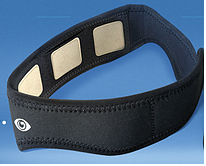
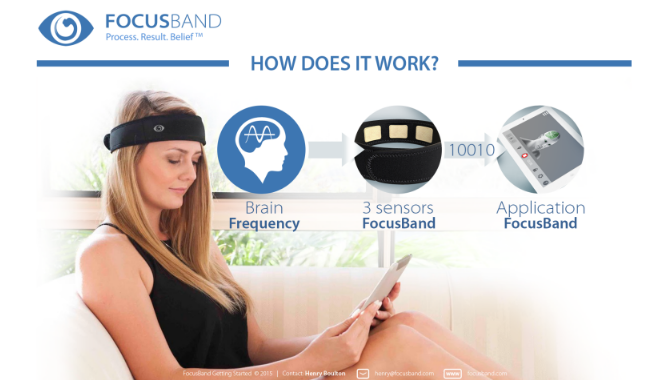
Three sensors inside a bioprene headband measure brain activity and link the data to a smartphone app. By following the app's exercises and responding to visual cues and sounds, the user can learn to change the reading on the app's brain avatar from red (thinking) to green (creative). Boulton calls this green state mushin, Japanese for the "zone" or "no-mindedness."
The ability to measure brainwaves has been around since the 1920s, but interpreting these waves for the average consumer is a new frontier in performance training. The system a user gets with the FocusBand, while basic, offers analysis at the level you'd get with a body-tracking device like Fitbit.
"Once we defined the process, we were able to score the process," says Boulton, who splits his time between Brisbane, Australia, and Aliso Viejo, Calif. "If you can change your scores you can change your results. Once you get those results, you get belief. That's the edge the top players are looking for."
The device costs $600. Users can download apps specific to golf, yoga, baseball or general mental performance. Boulton is testing the newest FocusBand element, GPS Brain Tracka, which will allow users to review their brain state with each shot—showing the lift or hangover that comes with each outcome. Call it a real-time mental scorecard. "Usually, the starting point for training has been technique," Boulton says. "You start with technique, work on fitness and then finish with mind training. We're showing that you should be training the mind first. Get your mind right, and everything will get better together." —Matthew Rudy

Monday, 4 April 2016

FocusBand Used In A Tournament


Well, I ran out of gas at the end of this week, but it is still my favorite trophy wink emoticon It was still a special week as I wore the FocusBand for the first time in competition (wearing it in the picture) and we got some good data. It's an exciting learning process - just need to be patient with the changes I'm making. On our level it is 95% mental, so I'm looking forward to the progress and insights! Thank you @kiamotorsusa, Aviara Golf Club and all the lovely fans and volunteers for cheering for us! Congratulations @lydsko ðŸŽ‰

Saturday, 12 December 2015

FlightScope Signs Exclusive Partnership Deal With FocusBand

FocusBand Press Release
11 December 2015

Leader in ball tracking technology partners with wearable, mind-sensing headset developer to bring new level tech to sports
ORLANDO, Fla. - December 11, 2015 - FlightScope, a world leader in the development and manufacturing of 3D Doppler club and ball tracking monitors, golf radars and launch monitors for sports, today announces its exclusive partnership with FocusBand, a wearable, motion based mind-sensing headset that measures and trains your shot routine using real time audio-visual neuro-feedback. FocusBand is the #1 motion based brain training system on the PGA Tour. Through this partnership, FocusBand technology will be integrated into all FlightScope products.
"As I see it, FocusBand is essentially the FlightScope for the brain, which is what makes this partnership such a natural fit for us," said Graham Boulton, CEO of FocusBand. "The partnership will further strengthen our already successful Mental Process, Results, & Belief system by integrating the FocusBand and FlightScope technologies into a unified system, providing analysis and feedback on several different aspects of your game."
FocusBand analysis will be integrated into FlightScope's all in one tool for its mobile and PC platforms. FocusBand will measure the mental process for shot routines, from the time before the swing through impact, and FlightScope will track the results with 27 different swing and ball flight parameters. Also, using FlightScope's apps, players can instantly view neuro-feedback side-by-side with the radar data, and compare their state of mind with real-time results for enhanced training.
"We've spent a lot of time mastering FlightScope technology to accurately measure a player's physical skills, but we were interested to explore how someone's mental state ties in to their overall game play as well," said Henri Johnson, CEO of FlightScope. "This partnership with FocusBand is the perfect way to help us take FlightScope's technology to the next level and give our players an effective way to explore all facets of their game."
FlightScope will debut its FocusBand integration at the PGA Merchandise Show in January 2016. To pre-order a FocusBand with FlightScope integration visit: flightscope.com/en/product/focusband.

Tuesday, 24 November 2015

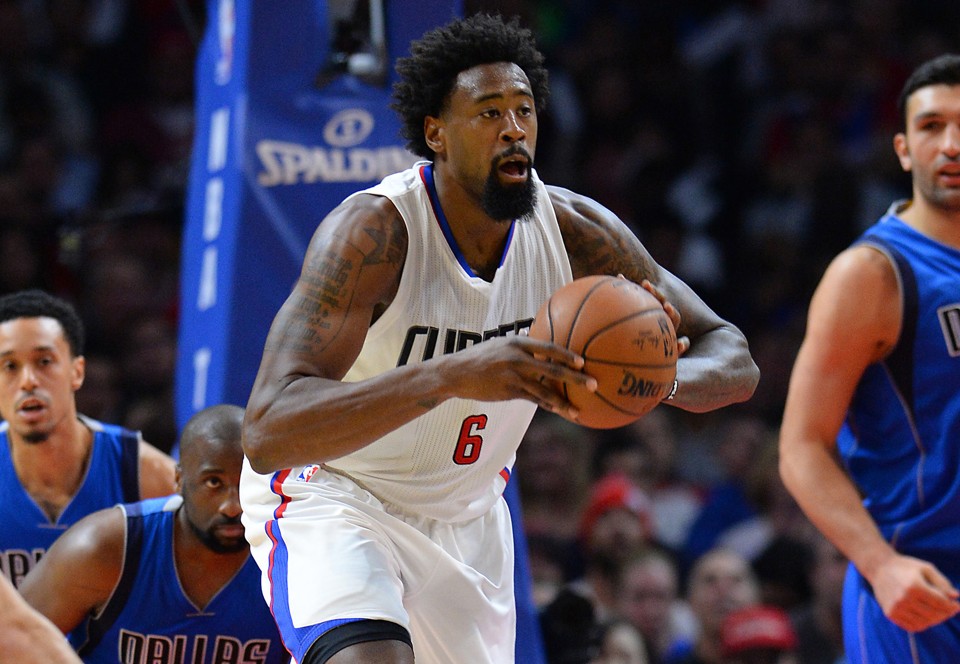
Quiet Eye with DeAndre Jordan

Quiet Eye with DeAndre Jordan
The Los Angeles Clippers's DeAndre Jordan

Consider two very different basketball players. The Los Angeles Clippers star DeAndre Jordan, one of the strongest, quickest players in the NBA,  nevertheless made only 39 percent of his free throws last year. Then there’s his teammate, Jamal Crawford—not as fast or as strong as Jordan, but he makes 90 percent of the shots he takes from the foul line, a rate that’s among the best in the league.
What makes one player a stellar shooter, while another has more trouble making a basket? As Jordan demonstrates, it’s not just a question of sheer athleticism. The difference between athletes like him and athletes like Crawford may well come down to a concept known as “quiet eye”: a new way of understanding how people perform precise motor-skill tasks like shooting a basketball, flying a jet, or removing a brain tumor.
Until recently, most researchers viewed these skills in terms of coordination and reflex, believing that those who were better at making a free-throw or suturing a wound simply had had superior physical dexterity. But in the past few years, a small group of neuroscientists have identified a new way of understanding coordination, one that focuses on visual and cognitive skills over physical prowess.
The concept, known as the quiet-eye theory, is deceptively simple: Before you perform an action, you focus your gaze on the salient aspects of your goal—the rim, the catcher’s mitt, the malignant tissue, and so on. In recent years, using eye-tracking technology, researchers have found that locking onto the relevant stimulus during the right time frame—typically the few hundred milliseconds before, during and after the movement—greatly improves your chances of success.
“When your eyes provide the data, your motor system just knows what to do,” says Joan Vickers, a cognitive psychologist at the University of Calgary and one of the originators of the quiet-eye theory. “Your brain is like a GPS system. It detects target, speed, intensity, and distance.”
But quiet eye encompasses more than vision; it’s about attention, too. The gaze is a key factor in the brain’s ability to concentrate on the essential details rather than ancillary noise. In a study published this spring by researchers at the University of Exeter in the U.K., the scientists found a clear link between a person’s ability to store information in short-term memory—a good measure of the ability to focus—and their ability to use the quiet eye approach.
Some evidence indicates that the quiet-eye technique stimulates the dorsal area of the brain, which regulates focused, goal-directed attention. It may also suppress activity the ventral region, which oversees stimulus-driven attention—the kind that keeps track of a scattered, fluid set of variables. There’s probably more to it, though: Mark Wilson, a psychology professor at Exeter who studies quiet eye, points out that training in the technique tends to change a range of physiological measures, including heart rate and patterns of muscle movement.  

Thursday, 19 November 2015

Neuro Training at Cairns Sports Performance Clinic


FaceBook by Rob Gronbeck
www.cairnssportsperformanceclinic.com.au

"I train athletes using a 3D multiple  object tracking system called NeuroTracker (this is not an ad I assure you). The program tests & trains 4 different types of attention & visual processing speed. The best team-sports athletes are the best at this task and my clients and I have greatly improved our sports performances as a result of the NT. So... :)


My FocusBand + Neurotracker experiment:


Step 1) My clients and I performed our regular NT training session (5 - 6 mins) scoring near our own current plateau/ceiling scores.
Step 2) My clients and I did 5 - 8 minutes of FocusBand Mental Energy Tank (up to 300 - 800 MET).
Step 3) My clients and I all immediately began another NT training session (lasting 5 - 6 minutes).


Result: In 4/5 times I have conducted this process my clients and I have all resulted in significantly improved scores... bonafide PBs.


Discussion: While a small sample size, it appears getting into a 'high Mushin state' (80) for a short period of time (5-8 mins) prior to perceptual-cognitive tasks such as NT may lead to greater positive performances and enhanced attentional & visual tracking abilities in athletes (and likely non-athletes as well).

VERY NICE WORK GRAHAM & HENRY & THE TEAM at FOCUSBAND on such an elegant design and piece of equipment!!"

Sunday, 20 September 2015


Jason Day using the FocusBand

We have been asked numerous times, why & how did Jason Day start using the FocusBand

Here's the story
Jason was on the range doing the Trackman Combine test and came up with a score of “X”
His driver was not going where he intended it to go

As luck would have it, Henry Boulton & Jason Goldsmith from the FocusBand team were there and convinced him & Col to do a 30 minute session on the FocusBand and then try the Trackman combine again, while wearing the FocusBand.

Aha moment !

This time his score was 10% better than his previous best, after only 30 minutes on the FocusBand.

Jason’s comment was “Just imagine how good I could be if I did this for a few years”

The rest is history .... he is now number one in the world !

Jason Day doing the Trackman Combine test with the FocusBand


The FocusBand is not just for Touring Pros

We did a research study with 300 club golfers and the results were outstanding.
After two 1 hour sessions 98% of the golfers experienced the calming Mushin state which they were able to take away with them and actually use it on the golf course.

The FocusBand is now used for anxiety, stress, high blood pressure and many other ailments


Tuesday, 4 August 2015

3 Massive Mistakes even “PGA Tour Players” make that keep them frustrated about the “Driver “


We have a Audio recording of Henry Boulton and Jason Goldsmith,  

The FocusBand Performance Directors discussing common problems

PGA Tour players have on the tee box and the mystery ball,  what

caused these and then a simple solution you can try yourself next time

you are out on course.  


3 Mistakes even PGA Tour Players make with Driver
1.  Don't Commit to the shot 
2.  Intellect asks second question over the ball  
3.  Lack of Target Awareness 

#1 Doubt on the Tee box  
The voice in your head is in overdrive, trying to sabbotage your routine you
are stuck in the rut letting the left brain try and run the  show and it can't.  

Source of the problem:
-  Not committed to the shot they were trying to hit 
-  Second questions by the intellect over the ball 

Once they eliminated these problems in their shot routine   
This would free up the body and allow them to hit further and straighter

 #2 The Mystery Ball 
The ball that can literally go 2 fairways across off the tee, leaving you scratching
your head,  is it possible I completely lost all idea on how to hit a driver?  
Source of the problem:
-  Lack of awareness of the target 
-  No longer have a clear intent of what you want to do 
-  Intellect gets involved again “the oh no don't hit it left"


By allowing their awareness to get back on what was relevant
i.e The Target and the Ball  
The mystery ball went away, and they hit it further and straighter

We used the FocusBand to train players how to experience the
Mushin State (right brain) that helped them overcome these problems
using Audio-visual feedback during the shot routine on-course during
practice rounds.     

Simple Tip 
What you can do next time you are on the Tee box 
1.  Try asking yourself a good question when your on the Tee 
      Example   "What would I good high draw look like"

2.  Let your brain answer the question

3.  Don't answer it with language allow the visual to come to you as an image 

4.  Complete your shot routine, and see how it goes.  

Good luck for your next round of golf 

If you interested in finding out more about FocusBand or upcoming workshops 
please visit www.focusband.com
The FocusBand Team